Emotions are hard — naming them, feeling them, talking about them. I don’t think there’s a single person on Earth who hasn’t struggled with their emotions at least once in their life. That struggle might look like suppressing emotions when it feels inappropriate to show them, or the opposite — being unable to express emotion when it feels important to do so.
For me, emotions are something I struggle with, a lot, particularly understanding whether I even have them at all some of the time. To help make sense of where my emotions come from — and whether they’re even there — I’ve started looking at myself as if I were a cup. A glass cup, specifically.
A cup is something that holds space. Whether it’s empty, full, or shattered on the ground, it still exists. A cup in its whole state can be one of two things: it can contain something, or it can be empty. There is no in-between — there is either substance inside it, or there isn’t.
Most of the time, my emotional cup is empty. The cup itself is still there, but there is no substance inside it. That mirrors how I often feel — empty. Emptiness is complex and difficult to explain, because there’s nothing to explain. You don’t feel sad, or happy, or angry. You just don’t feel.
That said, emptiness can be a foundation for something new. Sometimes emptiness is necessary before building something different. In the same way a field must be cleared before a home can be built, space has to be made. The trees that were there were beautiful, but their removal allows new life to grow.

Within reason, of course. Just as emptiness can create space, too much of it can lead to less. A field of trees supports life; forest upon forest without balance can lead to destruction.
There are many mechanisms by which a cup can be filled, and many different amounts, concentrations, and mixtures of substance that can be poured into it.
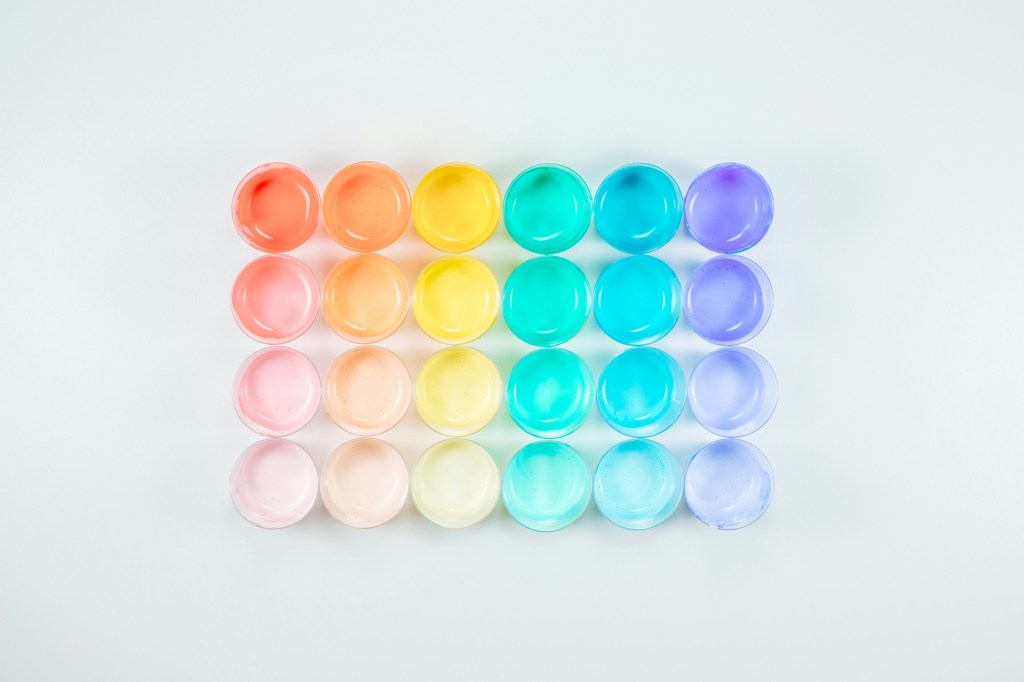
Using general colour–emotion associations, we can begin to understand our own cups. Something small I do in the morning might add a dash of yellow — happiness. Later that same day, something else might add blue — sadness. On their own, those emotions are easy enough for me to recognise.
But when they mix, the result is green. Something new. Something unfamiliar. Even so, it’s still important to notice the mixture that’s been created.
It’s also worth remembering how vast the colour spectrum really is. Yellow isn’t just yellow — is it sand? Dandelion? Sunshine? The hue matters. In the same way, happy isn’t always just happy. Understanding emotional nuance is just as important as recognising the emotion itself.
A cup can be filled in many ways. Another person might pour something in. A situation might spill over the brim. For me, the hardest way to fill my cup is doing it myself.
Sometimes I don’t even know where to start looking for the liquid — it feels like a drought. And in a drought, sometimes you have to search for new land with water, especially if you won’t make it to the next rain.
There are also times when my cup feels empty, but if I slow down and truly pay attention, I notice something translucent inside it. Not empty — just subtle. Easy to miss without taking a closer look.
I see this clear liquid as contentment. Not happy. Not sad. Just okay.
Life can feel chaotic — like everything is going ass over tits — but noticing that clear liquid, if it’s there, can be grounding. What looks empty at first glance can steady you in the middle of a storm.
Then there is the broken glass — the sharpest and most painful state of all. This is the one we don’t throw away.
Sometimes a broken cup can still hold something, even if only a little. It depends on how it broke. My cup has broken more than once. There were times it could still hold substance, and times it couldn’t.
Repairing it is slow. Picking up the pieces. Putting them back together. This is where time matters.
You can rush the process with superglue, but the result is harsh — glue bulging from the cracks, barely holding. These repairs tend to fail again under even small pressure.
There is a Japanese art form called kintsugi, which roughly translates to “golden repair.” It’s the practice of repairing broken pottery with gold lacquer and is closely connected to the philosophy of wabi-sabi — finding beauty in imperfection and history.
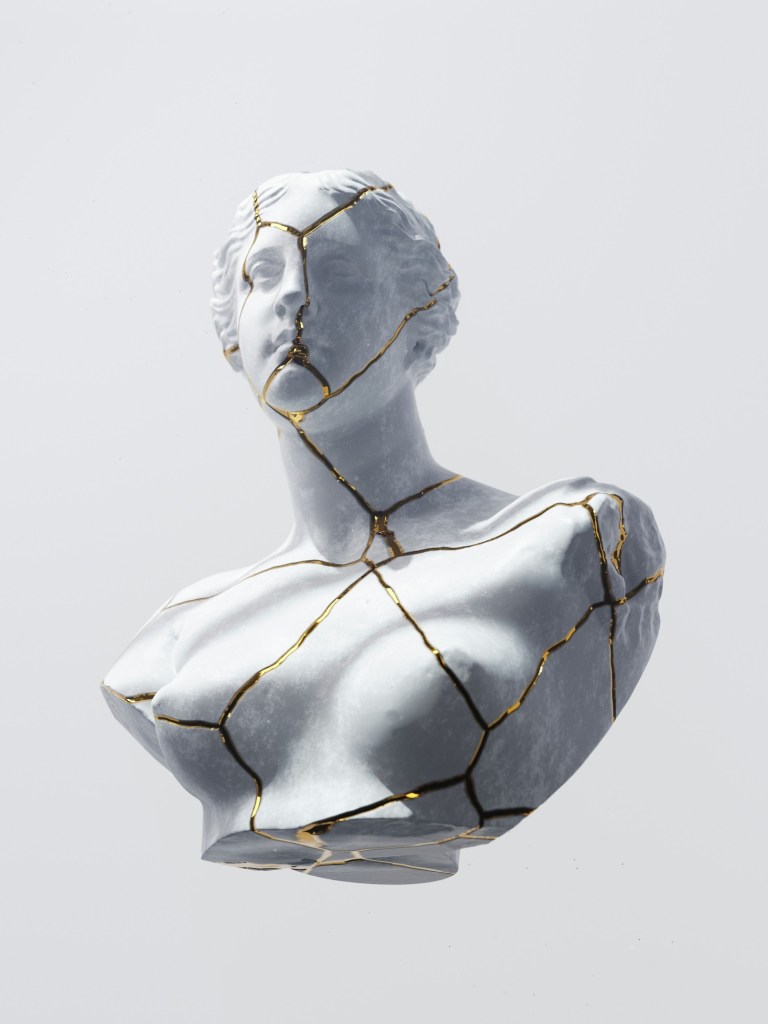
Kintsugi takes time, patience and practice, but the end result is often stronger and more beautiful than the original. The cracks remain visible, but they’re transformed into something to admire rather than something to hide.
There is also the option of melting the glass down entirely and creating something new. This process takes time and intention — and intent matters. Healing can easily turn into harm if we’re not careful.
When remaking yourself, I urge you to make a cup. A sealed globe filled only with yellow liquid — happiness with no way in or out — may seem tempting. But it would become the only thing you’ve ever known. And if that globe were to break, who’s to say you could ever recreate that exact hue?
Colour changes and broken glass are part of life. What makes the difference is knowing your colours and having the right tools to repair your cup.
There will be times when a temporary patch has to do. Times when a colour comes and goes without being fully understood. There is nothing wrong with that.
What matters is noticing when your cup is being neglected or misunderstood, and taking a step back to see what’s really going on.
Emotions aren’t simple — and they never will be. Sometimes it just takes your own way of looking at things to take one step closer to understanding your own.
 Mossy Hits
Leave a comment